Monday, March 4, 2013

Top 3 Initiation Rites

           When I googled "painful initiation rites" I found the first website was "10 Incredibly Painful Rites of Initiation," and the first two initiation rites found on the page were "Sepik Scarification" (cutting back to look like a crocodile) and "Naghol - Land Diving"(bungee jumping from the tower). This may or may not be one of the reasons why these two traditions were told so often in class. 

           The "bullet ant" initiation was told the most numerous times over the three day period. The third website listed as a result of the search was titled " Paraponera - Wikipedia, the free encyclopedia, and had the description "The pain caused by this insect's sting is purported to be greater than that of any other... The goal of this initiation rite is to keep the glove on for a full ten minutes." Considering the assignment was to choose an initiation practice that was painful, I can see why a person might choose this tradition due to the convincing website description. 


Beyond these speculations, I would like to look closer at the myths themselves. The bullet ant and the sepik scarification are both extremely painful, and unique. The scarification is very interesting because it creates the a look of a crocodile, that is deemed desirable in that culture because the process leaves the young man behind, leaving the man.  This is surely an example of the transformation that comes with initiation. This sort of rite seems to be practiced in modern cultures....the age for an individual to get a tattoo on his/her own in Montana is 16. And interestingly enough, today, some people are using this form of cutting to produce tattoos. 

The bullet ant initiation, besides being incredibly painful in a surprising way, is captivating because the initiates actually hunt the ants and sedate them so they may be woven into gloves. Then the gloves are worn for 10 minutes, all the while the initiates are to show no sign of pain or agony. Although this may seem unproductive, this rite allows boys to pass from boyhood to manhood. If I were to consider a right of passage for young boys, I would never be so creative as to think of this. It is thrilling to think of how this came to be so important in their culture. 

As for the land-diver myth, this is so relatable to us today because of the prevalence of bungee jumping. Rather than being for fun; however, this is for the dignity of men and the tribe, and is high-stakes, since the divers can lose their lives. The high-stakes elements of this initiation right, as well as other high-stakes activities, makes it thrilling, frightening, and interesting. 


Sunday, March 3, 2013

Self-Torture Rite of the Gros Ventre Indian Tribe

I shared this self-torture rite practice in class, but I forgot a few things, so I thought I would give some visuals and summarize the main points of this practice.


The self-torture rite is also known as the giving of the flesh, and it occurs on the third day of the four-day long Sun Dance festival. Those who choose to participate in the sacrifice often do so as a way of thanking the supreme being for things such as the return of a lost relative, or healing from a major illness. It is also done as a way of seeking wisdom or to attaining a desired object. Those who choose to participate are responsible to ask an older tribal member to act as his promoter in the ceremony. On the third day, the pledger sits on a robe near the center pole. His promoter pulls out skin from two places on his chest, cuts slits on either side of the stretched flesh, and thrusts a wooden skewer through the slits. A rope is tied to these two skewers. Two cuts are also made on the upper-right shoulder, a skewer is pushed through, and his war shield is attached.


The promoter has the pledger stand up, and holding the ropes attached to the skewers, he shoves the pledger backwards to show him what he is about to undergo. The pledger is also instructed to yank on his war shield to make sure its fastenings are sure. The ropes are then attached to a rope which is attached to the top of the center pole. The pledger begins dancing in an up & down motion in a half-circle around the pole, all the while leaning back in the attempt to rip the skewers from the flesh. He is also responsible to pull his war shield off his shoulder during the dance. If the skewers of a dancer do not rip through his flesh, and the pledger is going through prolonged suffering, a family member of the pledger may give a gift to a warrior of the tribe. He then stands to give a testimony of one of his war achievements to show he is worthy to aid in the ceremony. The warrior then throws his body against the dancer so that the skewers may rip from his chest.

(these are scars of  Ogalala Lakota Indian of South Dakota who had partaken in the Sun Dance rituals in his tribal community - this practice was very widespread among Native Americans)

During these four days of the Sun Dance ceremony, the pledgers and their promoters are fasting from food and drink. Also, if someone has pledged to participate in the self-torture rite, he is responsible to do it four times in his lifetime. For more information, you can check out http://www.jstor.org/stable/25666782 .

Stallcop, Emmett. "The So-Called Sun Dance of the Gros Ventre." Plains Anthropology, 13(40) : 148-
          151, May 1968. Web. 21 Feb 2013. 

Friday, March 1, 2013

Myths of Months!

Happy first day of March!

Just this week I realized that I do not know the etymology of the months of January, February, March, April, May, June, July, August. So I hopped on wikipedia and discovered the myths related to these well beloved months.

January: "is named after Janus, the god of the doorway; the name has its beginnings in Roman mythology, coming from the Latin word for door since January is the door to the year."


February: "The Roman month Februarius was named after the Latin term februum, which means purification, via the purification ritual Februa held on February 15 (full moon) in the old lunar Roman calendar."


March: "The name of March comes from ancient Rome, when March was the first month of the year and named Martius after Mars orAres, the Greek god of war. In Rome, where the climate is Mediterranean, March was the first month of spring, a logical point for the beginning of the year as well as the start of the military campaign season."

April: "The derivation of the name (Latin Aprilis) is uncertain. The traditional etymology is from the Latin aperire, "to open," in allusion to its being the season when trees and flowers begin to "open," which is supported by comparison with the modern Greek use of ἁνοιξις (anoixis) (opening) for spring. Since some of the Roman months were named in honor of divinities, and as April was sacred to the goddess Venus, the Festum Veneris et Fortunae Virilis being held on the first day, it has been suggested that Aprilis was originally her month Aphrilis, from her equivalent Greek goddess name Aphrodite (Aphros), or from the Etruscanname Apru."


"The month May was named for the Greek goddess Maia, who was identified with the Roman era goddess of fertility, Bona Dea, whose festival was held in May. Conversely, the Roman poet Ovid provides a second etymology, in which he says that the month of May is named for the maiores, Latin for "elders," and that the following month (June) is named for the iuniores, or "young people" (Fasti VI.88)."


 Ovid provides two etymologies for June's name in his poem concerning the months entitled the Fasti. The first is that the month is named after the Roman goddess Juno, wife of Jupiter and equivalent to the Greek goddess Hera; the second is that the name comes from the Latin word iuniores, meaning "younger ones," as opposed to maiores ("elders") for which the preceding month May may be named (Fasti VI.1–88).


And July and August were named in honor of Julius Caesar and Augustus, respectively. 

"January" Wikipedia, The Free Encyclopedia. Wikimedia Foundation, Inc. 20 Feb 2013. Web. 1 March 2013
"February" Wikipedia, The Free Encyclopedia. Wikimedia Foundation, Inc. 28 Feb 2013. Web. 1 March 2013
"March" Wikipedia, The Free Encyclopedia. Wikimedia Foundation, Inc. 1 March 2013. Web. 1 March 2013
"April" Wikipedia, The Free Encyclopedia. Wikimedia Foundation, Inc. 23 Feb 2013. Web. 1 March 2013
"May" Wikipedia, The Free Encyclopedia. Wikimedia Foundation, Inc. 26 Feb 2013. Web. 1 March 2013
"June" Wikipedia, The Free Encyclopedia. Wikimedia Foundation, Inc. 24 Feb 2013. Web. 1 March 2013
"July" Wikipedia, The Free Encyclopedia. Wikimedia Foundation, Inc. 24 Feb 2013. Web. 1 March 2013
"August" Wikipedia, The Free Encyclopedia. Wikimedia Foundation, Inc. 22 Feb 2013. Web. 1 March 2013

Wednesday, February 27, 2013

Initations

Initiation. As I thought of times of initiation in my life, I came to realize that there are many more instances than I had ever considered. I also found that the trial overcome and the knowledge gained through initiation result in a ticket, an invitation, to a group of people...and this ticket is necessary, there is no way in the club without it.

Here are a few of "initiation" experiences in my life:

1. Us younger players had heard about it for quite some time. Often times the stories seemed unbelievable. How could a person survive such a drill? My experience so far had taught me that my lung capacity would not suffice in such an experience. I could say I had done "so many" suicide runs consecutively, had survived through the dreaded "quick fire" drill, and had survived many a morning practice... but I could not say I had experienced the "popcorn" drill. When I did finally run a popcorn, I realized that I always considered it to be much harder than it actually was (probably due to the stories I had been told), but after successfully completing the drill, I had gained the right to say I had also been made to run "a popcorn." I was now a sort of high school basketball veteran.

2. I was initiated into a sorority in fall of 2009....and that is all I can say about that.

3. I underwent another initiation with one other person. We were required to take ten classes, to pay for an official document evidencing our initiation, to prepare for seven months, to spend too much time and money, to make sure and have witnesses of the initiation, to feed all of the witnesses (dinner and cake), and to make a life-long vow in the presence of God. Yep, it was the initiation of marriage. It was something I could read about, talk to those who had undergone the initiation, learn about it and prepare for it, but nothing would bring me to this new stage of life apart from it. I don't think I could say it was painful...but I now am a "Mrs." for the rest of my life and I have joined the married couples club.

Thursday, February 21, 2013

Ovid's Top Five Bike Rides

A news article was titled "The World's Top Ten Bike Rides." My mind quickly considered the chariot ride of Phaeton, and although it was fatal, it seemed to be quite the trip. I have decided to report on "Ovid's Top Five Bike Rides," and here it goes:

5. Cadmus's Course:
This path is not specifically marked out, but it has a few guidelines. First, travel around the world as if looking for your lost sister. Once you have given up, determining she is nowhere to be found, go ahead and meet with a prophet. Continue on the bike ride until you come across a white ox lying down on the ground. In reaching the spot where the ox lies, you have completed the journey!


4. Trip to Hades:
This adventurous ride is one that is never forgotten (as long as you are not a shade, of course). In this course, you can enter through the "tall gates of Taenarus down to the world of Death and flowing Darkness." Throughout the ride, you will see the "streets of Tartaus [as they wind] in Hell" and the famous eternally punished men: Sisyphus, Tantalus, and Ixion. By passing back through the Styx you have finished the course.


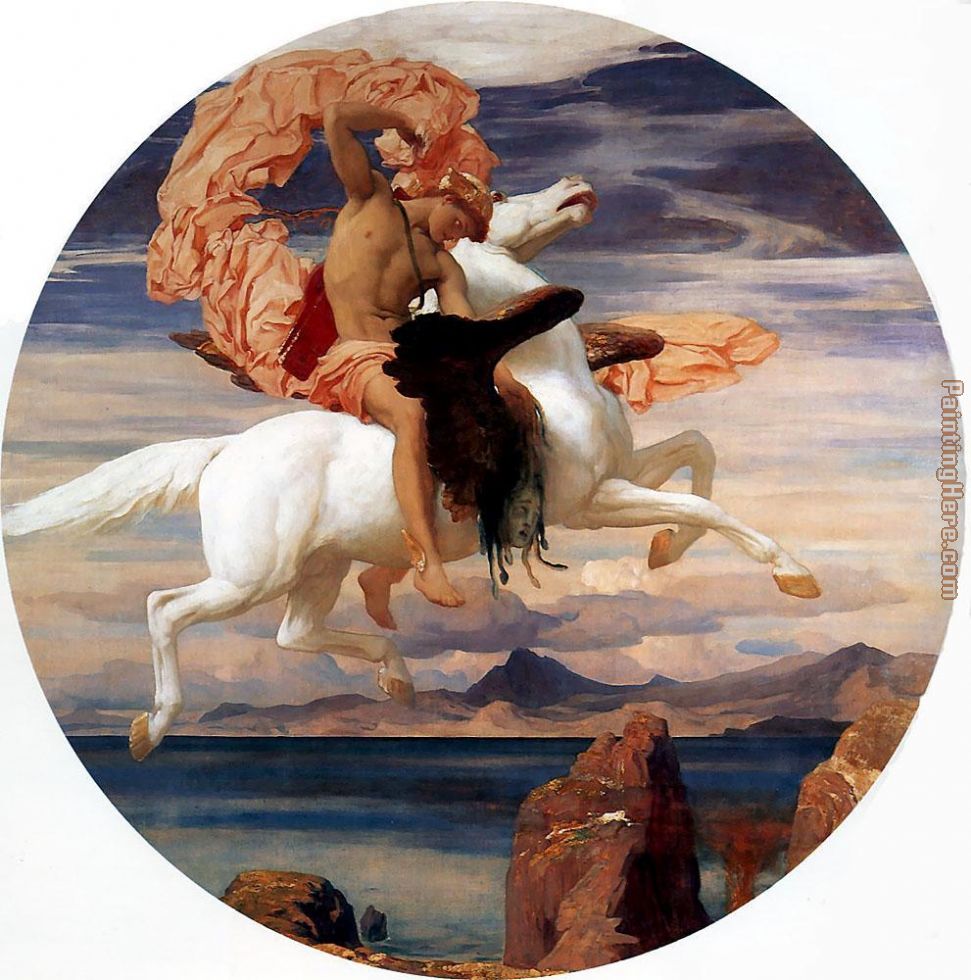
3. Perseus's Pathway:
This ride pleasantly begins in the garden of the Titan Atlas, but it quickly turns plenty hard as you ascend the mountain of stone. (Interesting Fact: Made of the Titan Atlas, this mountain actually supports the heavens.) Following the mountain trek, you will be able to enjoy the beautiful coral along the Ethiopian shore. Continue to travel around the world, and be sure to take note of the "annoying" look of the people who have been turned to stone by the forerunner Perseus. Watch out for toxic snakes as your race to the finish line at Seriphos.


2. Medea's Mad Bike Ride:
It is best to ride this course as if you are guilty of many crimes. Don't ask why, that is just the way it is. Begin this journey at the Mount Pelion, and continue gaining altitude to reach the top of Mount Othrys. On the downhill ride be sure and look for the "huge writhing serpent carved out of stone." Continue through Ida's forest, to the sandy shores (don't mind those "unearthly noises"), to the "town of old Eurypylus."If you have the determination to continue on, you will soon see the "great walls of old Carthaea"on the island Cea, and then Hyrie's lake along the valley, where you may see a beautiful swan. If you still desire to complete the entire journey, pass through Pleuron, the island Calaurea, Cyllene, the "house where old Eumelus lived and grieved" and finally reach the endpoint of Corinth. Good look.


1. Phaeton's Ride:
The best part of this ride may be the starting point: the palace of the sun. You have to make sure to check out the artwork on the doors. Also, be sure to know the safety precautions. You MUST steer a middle course through the sky and maintain a medium altitude. As you start off on the course, make sure and take note of the view of the constellations; it is a stellar view. Watch out for stars and clouds, and be sure to abide by all the rules and maintain control. Otherwise you may have an unpleasant meeting with Jupiter's lightning bolt.


Thursday, February 14, 2013

Why an Absence of Ears?

I grew up on a farm in north-central Montana. The farm life was an absolutely wonderful experience. As I was thinking of the farm, while sitting in class, I remembered one of our cats. This cat is not real special or real friendly, but she is unique in the fact that she has no ears. Now it was not as if this cat was born without ears. According to my mother, the ears "froze off." I always considered this a valid explanation, but when I thought of the cat just the other day, I wondered what the mythological explanation could be for this cat without ears. (the picture below is not of my cat, but it gives you the idea)


So in my quest to find the myth that would explain this cat with no ears, I found there are two possible explanations. According to Wikipedia, there is a Yoruba myth of the goddess Oba who was married to the god Shango. There are a few versions of the myth. One of the more prominent versions being that a co-wife of Shango convinced Oba to cut off her ear and feed it to her husband. The reaction of her husband was not what she expected, seeing her mutilation and the food offering, he banished her forever. In another version of the myth, Oba cuts off her ears and gives them to Shango to eat (since they had run out of goat), that he might have strength to defeat the deity Ogun. 

The other myth regarding cut ears was found in the ebook Myths and Legends of China. The soldiers of the army of early China would cut off the ears of the "vanquished" and bring them to their king. 

I am pretty sure the cat on the farm is a female, so according to these myths, she may have been trying to overcome fellow co-wives by offering her ears as food, or perhaps after defeat in battle her ears were cut off before she began another one of her nine lives. 

Tuesday, February 12, 2013

Stories & Myths


In class, I have enjoyed hearing the "Professor Sexson" version of the myths. His "true stories" are entertaining, and function in a way to help us as students consider the myths in the context of the 21st century. As Professor Sexson tells his version, he is doing even more, he is giving us a better understanding of the oral tradition of the myths found in Ovid's Metamorpheses and the oral tradition of myths that are prevalent today. (An example being that my mother's first name is Diane, adapted from the name Diana, one of the Olympian goddesses.) One thing that I keep thinking about is at what point are edited versions of myths no longer myths? Professor Sexson not only shared his version of the story of Echo and Narcissus; he also spoke of the versions found in the writing of Euripides. Each version had its own charm and intrigue. There is a sense in which I have the liberty to embellish the myth myself, and yet I cannot deviate from the story-line altogether--I could not make Narcissus fall in love with Echo, get married, have children, and live happily ever after. Such a story does not reveal the precedent behind an action, and is therefore not a myth. This reveals the line drawn between a story and a myth. And this gained understanding gives me a greater appreciation for those who created the myths written in Ovid's book.