Thursday, February 21, 2013

Ovid's Top Five Bike Rides

A news article was titled "The World's Top Ten Bike Rides." My mind quickly considered the chariot ride of Phaeton, and although it was fatal, it seemed to be quite the trip. I have decided to report on "Ovid's Top Five Bike Rides," and here it goes:

5. Cadmus's Course:
This path is not specifically marked out, but it has a few guidelines. First, travel around the world as if looking for your lost sister. Once you have given up, determining she is nowhere to be found, go ahead and meet with a prophet. Continue on the bike ride until you come across a white ox lying down on the ground. In reaching the spot where the ox lies, you have completed the journey!


4. Trip to Hades:
This adventurous ride is one that is never forgotten (as long as you are not a shade, of course). In this course, you can enter through the "tall gates of Taenarus down to the world of Death and flowing Darkness." Throughout the ride, you will see the "streets of Tartaus [as they wind] in Hell" and the famous eternally punished men: Sisyphus, Tantalus, and Ixion. By passing back through the Styx you have finished the course.


3. Perseus's Pathway:
This ride pleasantly begins in the garden of the Titan Atlas, but it quickly turns plenty hard as you ascend the mountain of stone. (Interesting Fact: Made of the Titan Atlas, this mountain actually supports the heavens.) Following the mountain trek, you will be able to enjoy the beautiful coral along the Ethiopian shore. Continue to travel around the world, and be sure to take note of the "annoying" look of the people who have been turned to stone by the forerunner Perseus. Watch out for toxic snakes as your race to the finish line at Seriphos.
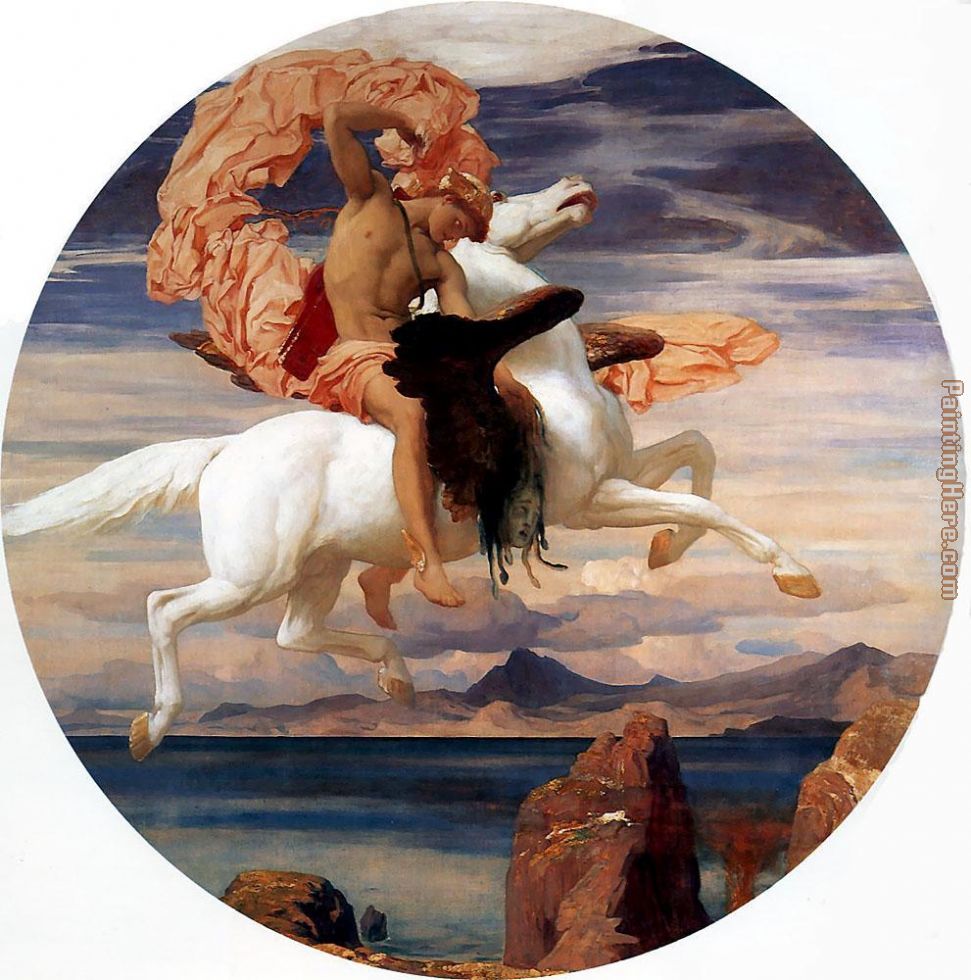

2. Medea's Mad Bike Ride:
It is best to ride this course as if you are guilty of many crimes. Don't ask why, that is just the way it is. Begin this journey at the Mount Pelion, and continue gaining altitude to reach the top of Mount Othrys. On the downhill ride be sure and look for the "huge writhing serpent carved out of stone." Continue through Ida's forest, to the sandy shores (don't mind those "unearthly noises"), to the "town of old Eurypylus."If you have the determination to continue on, you will soon see the "great walls of old Carthaea"on the island Cea, and then Hyrie's lake along the valley, where you may see a beautiful swan. If you still desire to complete the entire journey, pass through Pleuron, the island Calaurea, Cyllene, the "house where old Eumelus lived and grieved" and finally reach the endpoint of Corinth. Good look.


1. Phaeton's Ride:
The best part of this ride may be the starting point: the palace of the sun. You have to make sure to check out the artwork on the doors. Also, be sure to know the safety precautions. You MUST steer a middle course through the sky and maintain a medium altitude. As you start off on the course, make sure and take note of the view of the constellations; it is a stellar view. Watch out for stars and clouds, and be sure to abide by all the rules and maintain control. Otherwise you may have an unpleasant meeting with Jupiter's lightning bolt.


Thursday, February 14, 2013

Why an Absence of Ears?

I grew up on a farm in north-central Montana. The farm life was an absolutely wonderful experience. As I was thinking of the farm, while sitting in class, I remembered one of our cats. This cat is not real special or real friendly, but she is unique in the fact that she has no ears. Now it was not as if this cat was born without ears. According to my mother, the ears "froze off." I always considered this a valid explanation, but when I thought of the cat just the other day, I wondered what the mythological explanation could be for this cat without ears. (the picture below is not of my cat, but it gives you the idea)


So in my quest to find the myth that would explain this cat with no ears, I found there are two possible explanations. According to Wikipedia, there is a Yoruba myth of the goddess Oba who was married to the god Shango. There are a few versions of the myth. One of the more prominent versions being that a co-wife of Shango convinced Oba to cut off her ear and feed it to her husband. The reaction of her husband was not what she expected, seeing her mutilation and the food offering, he banished her forever. In another version of the myth, Oba cuts off her ears and gives them to Shango to eat (since they had run out of goat), that he might have strength to defeat the deity Ogun. 

The other myth regarding cut ears was found in the ebook Myths and Legends of China. The soldiers of the army of early China would cut off the ears of the "vanquished" and bring them to their king. 

I am pretty sure the cat on the farm is a female, so according to these myths, she may have been trying to overcome fellow co-wives by offering her ears as food, or perhaps after defeat in battle her ears were cut off before she began another one of her nine lives. 

Tuesday, February 12, 2013

Stories & Myths


In class, I have enjoyed hearing the "Professor Sexson" version of the myths. His "true stories" are entertaining, and function in a way to help us as students consider the myths in the context of the 21st century. As Professor Sexson tells his version, he is doing even more, he is giving us a better understanding of the oral tradition of the myths found in Ovid's Metamorpheses and the oral tradition of myths that are prevalent today. (An example being that my mother's first name is Diane, adapted from the name Diana, one of the Olympian goddesses.) One thing that I keep thinking about is at what point are edited versions of myths no longer myths? Professor Sexson not only shared his version of the story of Echo and Narcissus; he also spoke of the versions found in the writing of Euripides. Each version had its own charm and intrigue. There is a sense in which I have the liberty to embellish the myth myself, and yet I cannot deviate from the story-line altogether--I could not make Narcissus fall in love with Echo, get married, have children, and live happily ever after. Such a story does not reveal the precedent behind an action, and is therefore not a myth. This reveals the line drawn between a story and a myth. And this gained understanding gives me a greater appreciation for those who created the myths written in Ovid's book.


Wednesday, February 6, 2013

Coincidence


During Monday's class period, Professor Sexson gave us the assignment to find something interesting that we usually consider quite boring. Yesterday, in reading for my English Methods class, I came across a proposal for English teachers to like reading student writing. In his article, "Ranking, Evaluation, and Liking," Elbow writes,

"How can we be better at liking? It feels as thought we have no choice--as though liking and not-liking just happen to us. I don't really understand this business. I'd love to hear discussion about the mystery of liking--the phenomenology of liking. I sense it's some kind of putting oneself out--or holding oneself open--but I can't see it clearly. I have a hunch,  however, that we're not so helpless about liking as we tend to feel" (201).

I like his ideas here because I can sympathize with the feeling of being unable to like something. For instance, it is challenging to enjoy a person who is proud and haughty. Like the certain aspects that student papers bad, the characteristics of pride and haughtiness that are repulsive in such a person. We still have the option of liking the paper despite all it's downfalls, and we also have the choice to like and care for a person who may demonstrate unfavorable characteristics. Elbow writes this idea in a very succinct way:

"It's an act of discrimination to see what's good in bad writing. Maybe, in fact, this is the secret of the mystery of liking: to be able to see potential goodness underneath badness" (203)

So the next time I am reading a book or other assigned text that is less than favorable, or listening to my grandpa tell the same stories, or watching worthless television, I hope to undertake the challenge of seeing the "potential goodness underneath badness."

Saturday, February 2, 2013

Commonalities of Creation Stories

-The Flood: Many of the creation myths involved a flood; often because the deity (or deities) were unhappy with the way human beings were living.

-Beginnings: Is it too rhetorical to mention that most of the myths of creation started with "In the beginning there was nothing"?
            * I found it so interesting how some of the creation stories began with an already existing creation. For instance, the creation story of the Gros Ventre tribe that I found started with people who were wild and did not know how to do anything and so the creator decided to create a new world. It is almost more like recycling...

-Earth Divers- its tougher than it sounds... many earth divers were unsuccessful or only successful after pushing through adversity.

-Metamorphoses- in many creation myths, a body (or body parts) of a deity were transformed into the physical earth.

-Lonely Deities- human beings were often created because a deity was lonely...I bet it is because they can never keep their friends.

-Clay-made humans - often clay was used to create the form of a human being, and then life is breathed into the clay-figurine. Woman is not made from man, both are made from the clay, and different colored clay resulted in people of different colored skin.

Wednesday, January 30, 2013


The 
Precedent 
Before 
The 
Myth 


In Book II, there is a story about the raven. Toward the beginning of the story, the following text is written: 

"About that time the raven changed his color
From white to black, he who had once been silver-
White as the doves, as geese whose wakeful cries
Were destined to rescue Rome, as white as 
River-loving swans. But his tongue doomed him.
The chattering bird was everything not white"

Perhaps I myself am missing something, but from what I see, there seems to be some sort of precedent behind the color white, in order for the raven to be "everything not white." I comprehend white as being symbolic of purity, but since white is not inherently pure, there remains a precedent to be discovered of how white came to symbolize purity (or whatever other conceptions of white there may be). This causes me to wonder if there is a precedent behind every myth and whether there is anything without a precedent. I consider how God of the Bible is the creator of the "heavens and the earth," and while being eternal, He is before all precedents and therefore precedents can only be made because of who He is and what He has created. If this is correct, than precedents can only exist if an entity is already in existence. Precedents then, do not create; it is the precedents that are created. This is how my mind understands precedents. If I am mistaken of the meaning or function of precedents, please respond to this post and let me know! 

Tuesday, January 29, 2013


The Creation of the World
(retrieved from: http://www.markville.ss.yrdsb.edu.on.ca/history/religion/abmyth3.html)

This creation story, of the Gros Ventres Indians, is similar to the origin story of at least two other Algonquin tribes (the Arapahos and the Crees). It is also similar to stories handed down among the Huron and Iroquois tribes of eastern North America and to one related in 1953 by the oldest Chehalis Natives near the Washington coast.

The people before the present people were wild and did not know how to do anything. Because the Creator did not like the way they lived, he thought, "I will make a new world." He had the chief pipe. He went outdoors, hung the pipe on three sticks, and picked up four buffalo chips. He put one under each of the three sticks supporting the pipe, and took the fourth chip for his own seat.

The Creator said to himself, "I will sing three times and shout three times. Then I will kick the earth. There will be heavy rain, and soon, water will cover the earth."

So, he sang three times, he shouted three times, and he kicked the earth. The earth cracked and water came out. Then it rained many days and many nights until water was deep over the earth. Because of the buffalo chips, he and the pipe floated. Then the rain stopped. For days he drifted, floating where the wind and water took him. All the animals and birds had drowned except Crow.

Above the Creator, Crow flew around, crying. When it became tired, it cried, "My father, I am tired and I want to rest."

Three times Crow said these words. After the third time, the Creator replied, "Alight yourself on the pipe and rest."

At last the Creator became tired from sitting in one position and he cried. For a long time he did not know what to do. Then he remembered to unwrap the pipe. It contained all the animals. He took out all those that have a long breath and, thus, are able to dive through water. Large Loon, which he selected first, was not alive, but its body was wrapped up in the pipe. The Creator sang to it and then commanded it to
dive and try to bring up some mud. Not half way down, Large Loon lost its breath and turned back. Almost drowned, it reached the place where the Creator sat.

Then the Creator took Small Loon's body from the pipe, unwrapped it, sang, and commanded it to dive for mud. Small Loon nearly reached the bottom before it lost its breath and turned back. It was almost dead when it came back to the surface. Then the Creator took Turtle from the pipe, sang until it became alive, and sent it down after some mud.

Meanwhile, Crow flew about, crying for rest. The Creator paid no attention. After a long time, Turtle came up from the water, nearly dead. 

 "Did you reach the mud?" asked the Creator.

"Yes," answered Turtle. "I had much of it in my feet and along my sides, but it was washed away before I reached you."

"Come to me." The Creator looked in the cracks along its sides and in its feet. There he found a little earth, which he scraped into his hand. Then he began to sing. Three times he sang, and three times he shouted.

"I will throw this little dust in my hand into the water," he said. "Little by little, let there be enough to make a strip of land large enough for me."

He began to drop it, little by little, opening and closing his hand carefully. When he had finished, there was a small strip of land, big enough for him to sit on. Then the Creator said to Crow, "Come down and rest. I have made a piece of land for myself and for you."

Crow came down and rested, and then flew up again. The Creator took from his pipe two long wing feathers, held one in each hand, and began to sing. Three times he sang, and three times he shouted, "Youh, hou, hou!" Then he spread out his arms, closed his eyes, and said to himself, "Let there be land as far as my eyes can see around me."

When he opened his eyes, the water was hone and there was land as far as he could see. He walked over the earth with his pipe and with Crow. When he became thirsty, he did not know what to do to get water. Then he thought, "I will cry." So, he closed his eyes and cried until his tears, dropping on the ground, formed a large spring in front of him. Soon, a stream ran from out of the spring. When the Creator stopped crying, a large river was flowing. In this way he made all the streams.

When he became tired of being alone with Crow and his pipe, he decided to make persons and animals. First, he took earth and made it into the shape of a man. Then he took another piece of earth and made it into the shape of a woman. He molded more figures out of earth until he had created many men and women.

When the Creator thought he had enough people, he made animals of all kinds, in pairs. Then he gave names to the tribes of people and names to all kinds of animals. He sang three times, shouted three times, and kicked the earth. When he had finished, many pairs of living creatures stood before him, persons and animals.

He called the world "Turtle" because Turtle had helped him create it. Then he made bows and arrows, and he taught men how to use them. The pipe, he gave to a tribe called Haa-ninin (Gros Ventres).

He said to the people, "If you are good, there will be no more water and no more fire. Long before the flood came, the world had been burned. Now this is the third life."

Then he showed people the rainbow and said, "This rainbow is the sign that the earth will not be covered with water again. Whenever you have had rain, you will see the rainbow. It will mean that the rain has gone. There will be another world after this one."

He told the people to go off in pairs and to find homes for themselves. That is why human beings are scattered.